

Examining the Future of Transportation Funding
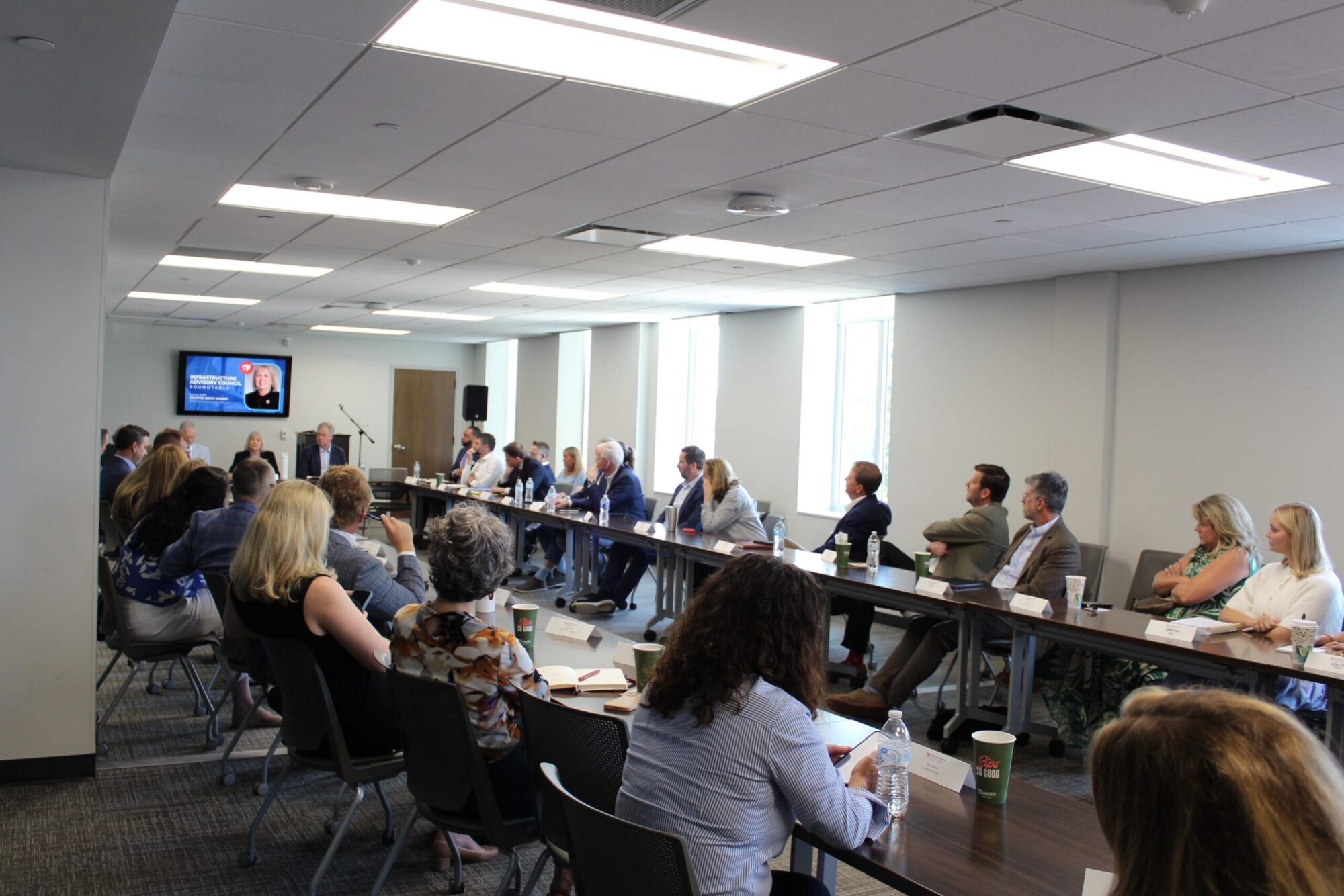
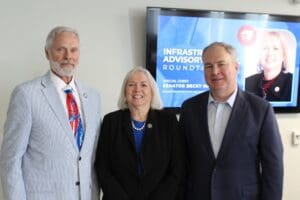
The Tennessee Chamber of Commerce & Industry’s Infrastructure Advisory Council brought business and industry leaders together September 8 at the Cordell Hull Building for a transportation funding roundtable with Senate Transportation Committee Chairman Becky Massey and House Transportation Committee Member Dave Wright.
The conversation focused on a question that is increasingly important to Tennessee’s continued growth: How does the state build a sustainable, long-term funding structure for the roads and bridges that keep people, products and businesses moving?
Tennessee’s transportation network continues to perform well in many areas, but population growth, tourism, economic development and increasing commercial traffic are putting additional demands on the system. At the same time, construction costs and inflation are outpacing growth in the state’s traditional transportation revenue sources.
According to a recent report from the Tennessee Advisory Commission on Intergovernmental Relations (TACIR), Tennessee needs approximately $3.6 billion in fiscal year 2027-28 to maintain its existing roads and bridges while continuing current levels of investment in capacity improvements. Existing recurring sources are projected to generate approximately $2.6 billion, creating a gap of roughly $1 billion. Without additional revenue, TACIR estimates that the gap could grow to approximately $2.5 billion by fiscal year 2047-48.
Why Transportation Funding Matters Now
Tennessee has experienced significant growth, adding nearly one million residents since 2010. The state also welcomed a record 147 million visitors in 2024 and serves as a major commercial freight hub because of its central location. That growth means more people, freight and commerce are relying on the state’s transportation network.
The funding challenge is not simply about building new roads. Tennessee must also maintain the infrastructure it already has while making strategic investments to accommodate future growth.
Fuel taxes and vehicle registration fees remain the primary recurring sources of transportation funding, but neither is keeping pace with the state’s needs. TACIR notes that transportation revenue from federal and state fuel taxes is growing by approximately 1.5% annually, while construction costs increased by approximately 12% annually from 2021 to 2025. Increasing fuel efficiency also means drivers are purchasing less fuel, further limiting the growth of fuel tax revenue.
What Could a Funding Package Look Like?
TACIR’s analysis emphasizes that there is no single revenue source capable of closing the transportation funding gap. Instead, the commission examined combinations of existing and potential revenue sources and evaluated them based on factors including revenue potential, how well they grow over time, how closely they are tied to road use and the administrative challenges associated with implementation.

During the roundtable, participants discussed the need to better understand and diversify revenue sources, increase efficiencies at TDOT, and explore the possibility of moving TDOT’s administrative budget to the General Fund. There was broad recognition that addressing the funding shortfall will require a combination of solutions rather than reliance on any single revenue source.
The conversation also examined strategic borrowing as a potential tool to accelerate major projects and avoid some of the higher construction costs associated with delaying critical investments. Ultimately, it is clear that a sustainable solution will require a tapestry of approaches and should be structured to avoid placing an undue burden on any one industry or sector.
The Role of the Business Community
For Tennessee businesses, transportation infrastructure is an economic issue. Safe and reliable roads and bridges facilitate the movement of goods, services and people and support business and economic growth across the state.
The roundtable provided an opportunity for business leaders to hear directly from legislative leaders about the political and policy considerations surrounding transportation funding, including what may be possible in the coming years and the role the next Governor’s administration could play.
Participants also discussed what a comprehensive funding package could look like, which proposals may present challenges for particular industries and what tradeoffs businesses may be willing to consider in pursuit of a long-term solution.
That conversation is an important part of the work ahead. Addressing Tennessee’s transportation needs will require education, engagement and a willingness to consider a range of policy options rather than relying on a single solution.
Continuing the Conversation
The Infrastructure Advisory Council will continue working to bring Tennessee’s business community into the conversation around the state’s infrastructure needs.
As Tennessee continues to grow, the question is not whether the state will need to invest in its transportation system, but how it can establish a sustainable funding structure that keeps pace with those needs.
The September 8 roundtable was an important step in continuing that conversation and building a collective business voice around one of the issues most critical to Tennessee’s long-term economic competitiveness.